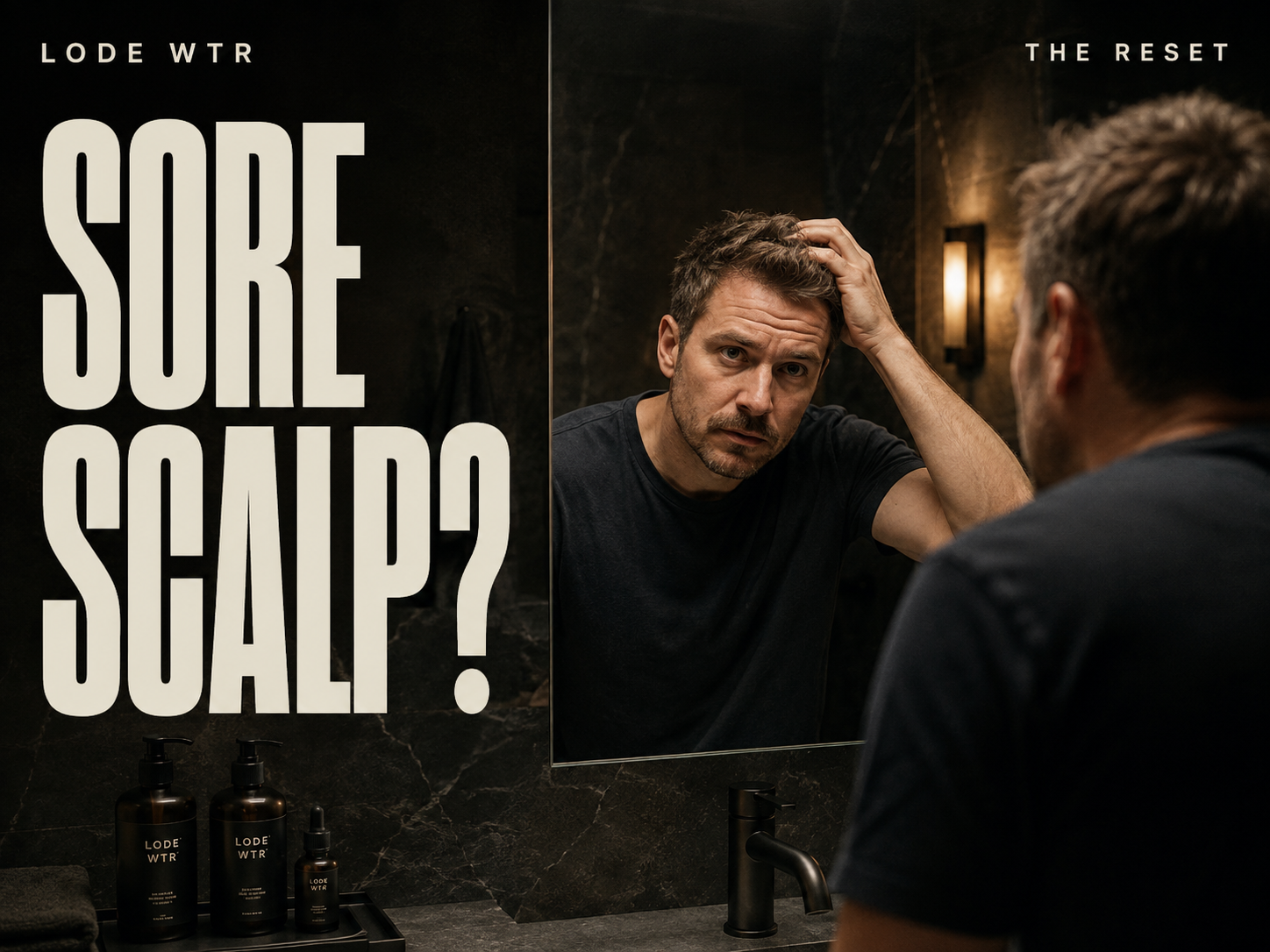
You take your hair out of a ponytail.
Move it to the opposite side.
And suddenly your scalp feels like it spent the last eight hours being personally offended.
Sore.
Tender.
Almost bruised.
Sometimes even moving your hair with your fingers feels uncomfortable.
Which creates a strange question:
Why does my hair hurt?
Technically?
It doesn’t.
Hair strands don’t have nerves.
But your scalp does.
And the skin, follicles and tissues around your roots can absolutely become sensitive.
Sometimes the explanation is simple.
Your hairstyle was too tight.
Other times, scalp tenderness may be connected to buildup, irritation, washing habits or an underlying scalp issue.
Here are eight possibilities worth looking at.
First: Can Your Hair Actually Hurt?
No.
The hair shaft itself doesn’t contain nerves.
So when people say:
“My hair hurts.”
They’re usually feeling discomfort in the scalp around the hair follicles.
That distinction matters because it shifts the question from:
What’s wrong with my hair?
to:
What’s happening on my scalp?
And that’s where things get more useful.
1. Your Hairstyle Is Too Tight
This is probably the easiest explanation.
Think about:
- Tight ponytails
- Slick buns
- Braids
- Tight extensions
- Clips
- Headbands
If your hair is pulled in one direction for hours, the scalp around those roots is under tension.
Then you take the style down.
The hair moves.
And suddenly the entire area feels sore.
You’ve probably experienced this exact moment after a long ponytail day:
Release hair.
Immediate relief.
Then strangely tender roots.
That’s your scalp reacting to prolonged tension.
If a style regularly causes pain while you’re wearing it, that’s already a sign to loosen it.
Beauty shouldn’t require your scalp to send a formal complaint.
2. You’ve Been Wearing Your Hair in the Same Direction for Too Long
Sometimes the hairstyle doesn’t even need to feel particularly tight.
Simply wearing the hair in one position repeatedly can make moving it feel uncomfortable.
Maybe you:
- Wear the same side part every day
- Sleep with your hair in one direction
- Keep the same bun placement
- Wear a hat regularly
Then you move your hair differently.
The roots shift.
And the scalp suddenly feels tender.
This usually doesn’t mean your follicles forgot where they belong.
It just means they’ve been held in one position for a while.
Giving the scalp a break from constant tension may help.
3. Product Buildup Is Sitting Around Your Roots
Scalp discomfort isn’t always about hairstyles.
Sometimes there’s simply too much happening at the root.
Your scalp may be carrying:
- Sebum
- Sweat
- Dry shampoo
- Styling creams
- Root powder
- Hairspray
- Gel
- Oils
When enough residue accumulates, the scalp can feel:
- Heavy
- Coated
- Itchy
- Tender
- Generally uncomfortable
Then you touch or move the hair.
And the discomfort becomes more obvious.
If your scalp tenderness appears alongside waxy roots, itching or oiliness, buildup is worth considering.
Read next: What Is Scalp Buildup? Signs, Causes and How to Reset Your Routine.
4. Your Scalp Is Irritated From Washing
You can absolutely clean your scalp too aggressively.
Consider your wash routine.
Are you:
- Using very hot water?
- Scratching with your nails?
- Shampooing twice every wash?
- Using a strong clarifying cleanser constantly?
- Washing very frequently?
If the scalp becomes irritated, it may feel sensitive when touched or when the hair moves.
That soreness can sometimes become most noticeable after showering.
Clean shouldn’t equal:
Raw, tight and tender.
If your scalp repeatedly feels worse after washing, the routine deserves a look.
Read: Why Does My Scalp Feel Tight After Washing?
5. You’re Scratching More Than You Realize
Itchy scalp.
Hand goes up.
Scratch.
Five minutes later?
Scratch again.
Do that repeatedly throughout the day and your scalp may become physically irritated.
Then touching the hair later feels uncomfortable.
This can create a cycle:
Itch → scratch → irritation → more discomfort → more touching.
Instead of aggressively scratching, try to identify why the scalp is itchy in the first place.
Could it be:
- Buildup?
- Dryness?
- Product sensitivity?
- Flakes?
- Sweat?
Your fingernails aren’t fixing the underlying issue.
They’re mostly adding friction.
Read next: Why Does My Scalp Itch After Washing? 7 Possible Reasons.
6. Your Scalp Has Been Sweaty for Hours
Workout.
Commute.
Hot weather.
Hat.
Another workout.
Your scalp can spend a surprising amount of time warm and damp.
Now add:
- Oil
- Styling products
- Dry shampoo
…and everything around the roots starts becoming more complicated.
Sweat doesn’t automatically cause scalp pain.
But a sweaty, oily, product-covered scalp may become uncomfortable, especially if you’re delaying cleansing for several days.
If your scalp feels tender after repeated workouts, consider whether your routine is matching your activity level.
Read: Post-Workout Scalp Care: How to Handle Sweat Without Overwashing.
7. Your Scalp Is Very Dry or Sensitive
Scalp tenderness can also appear alongside dryness.
You may notice:
- Tightness
- Fine flakes
- Sensitivity
- Mild burning
- Discomfort after shampooing
In this case, piling more aggressive cleansing on top of the problem may make things worse.
And here’s where scalp care gets annoying:
A scalp can feel dry while the hair still looks oily.
Those things are not mutually exclusive.
Oiliness describes sebum and residue.
Sensitivity describes how the skin feels.
You can absolutely have both.
Which is why treating every uncomfortable scalp with a “deep clean” isn’t always the answer.
8. Something Beyond Your Routine May Be Going On
Not every painful scalp is a hair-care problem.
Scalp tenderness can occur for reasons that aren’t solved by switching shampoo.
Persistent pain, inflammation or sensitivity may be associated with skin conditions or other medical issues.
That’s why recurring or significant pain deserves more attention.
Especially if it comes with:
- Redness
- Swelling
- Burning
- Thick scaling
- Sores
- Oozing
- Sudden hair loss
- Significant headaches
- Pain that continues even when you’re not touching the scalp
That’s the point to stop experimenting with products and speak with a dermatologist or healthcare professional.
Scalp care has a lane.
Know when you’re outside it.
Why Does My Scalp Hurt After Wearing a Ponytail?
This is extremely common.
A tight ponytail pulls the hair and creates tension at the root.
The longer the style is worn, the more noticeable that pressure may become.
Then once you let your hair down, moving the roots in another direction can feel sore.
The best solution?
Usually not a new product.
Try:
- Looser styles
- Changing ponytail placement
- Softer hair ties
- Taking breaks from tension
- Avoiding styles that hurt while you’re wearing them
If it hurts during the hairstyle, listen to that signal.
Pain is not extra hold.
Why Does My Scalp Hurt When My Hair Is Dirty?
People often describe their roots as “hurting” when they haven’t washed for several days.
Why?
There may be several things happening at once.
Your scalp could have accumulated:
- Sebum
- Sweat
- Styling products
- Dry shampoo
Your hair may also be lying flatter or moving differently as oil accumulates.
And if you’ve kept it tied back to hide greasy roots, tension gets added to the mix.
That doesn’t mean dirty hair itself is painful.
It means the scalp environment has changed.
If washing reliably makes the tenderness disappear, buildup and routine may be contributing.
Why Does My Scalp Hurt When My Hair Is Greasy?
Greasy hair and scalp tenderness can happen together.
But excess oil itself isn’t necessarily the entire explanation.
What we call “greasy hair” may actually be:
Sebum + sweat + styling product + dry shampoo + time.
That combination can make the roots feel heavy and the scalp less comfortable.
Then touching the hair draws your attention to the tenderness.
The solution may not be scrubbing harder.
It may simply be cleansing more appropriately for your routine.
Read next: Why Does My Scalp Get Greasy So Fast?
Can Dry Shampoo Make Your Scalp Tender?
It can contribute to buildup when used repeatedly.
Dry shampoo is designed to absorb some oil and improve the appearance of the roots.
Useful.
But it doesn’t replace actual cleansing forever.
If you’re repeatedly layering dry shampoo over:
- Sebum
- Sweat
- Styling products
…the scalp may start feeling increasingly coated or uncomfortable.
If your roots feel tender and you’re four dry-shampoo applications deep?
Your scalp may be asking for water.
Read: Is Dry Shampoo Bad for Your Scalp?
Why Does My Scalp Hurt After Washing?
If tenderness happens specifically after washing, look closely at the washing process.
You may be:
Scrubbing too hard
Your scalp doesn’t need aggressive friction.
Use your fingertips.
Not your nails.
Using water that’s too hot
Extremely hot water may leave already-sensitive skin feeling uncomfortable.
Cleansing too aggressively
Two strong washes plus clarifying shampoo isn’t always a scalp wellness plan.
Reacting to a product
If tenderness happens consistently with one specific formula, stop using it and observe what changes.
Your scalp is giving you feedback.
Use it.
Can Flakes Make Your Scalp Sore?
Flakes themselves don’t necessarily cause pain.
But if the underlying scalp is:
- Itchy
- Irritated
- Inflamed
- Frequently scratched
…tenderness can develop.
This is why aggressively scraping flakes away is generally not a great strategy.
Visible flakes may relate to multiple different scalp situations.
Treating all of them with more scratching doesn’t clarify anything.
Read next: Dry Scalp vs. Dandruff: What’s Actually Causing the Flakes?
How to Calm a Tender Scalp
If the tenderness is mild and appears linked to your routine, simplifying things may help.
1. Take the Hair Down
If a tight style is causing pain, release the tension.
Immediately.
No hairstyle needs to win this argument.
2. Give Tight Styles a Break
Rotate hairstyles.
Change where you place your ponytail or bun.
Give the same areas of scalp a rest.
3. Stop Scratching
Use your fingertips gently when cleansing.
If the scalp is itching enough that you constantly want to scratch it, look for the underlying reason.
4. Simplify Root Products
Temporarily reduce:
- Dry shampoo
- Root powder
- Hair oils
- Styling sprays
- Heavy creams near the scalp
Fewer variables make it easier to understand what your scalp is reacting to.
5. Clean Without Attacking the Scalp
Use comfortably warm water.
Massage gently.
Rinse thoroughly.
The scalp is skin.
Treat it like skin.
6. Don’t Automatically Clarify
A strong clarifying wash can make sense when there is substantial buildup.
But tenderness plus aggressive cleansing isn’t always a great combination.
Match the cleansing intensity to what you actually need.
7. Pay Attention to Patterns
Does the pain happen after:
- Ponytails?
- Wash day?
- Workouts?
- Several days without washing?
- One specific product?
- Wearing a hat?
Patterns matter.
They’re often more useful than buying something based on one symptom.
What About Scalp Massage?
A gentle scalp massage can feel relaxing when the scalp is comfortable.
But if your scalp is already painful or inflamed?
This isn’t the moment to perform a ten-minute aggressive massage because social media said it “stimulates the follicles.”
Pain is a reason to be gentler.
Not more enthusiastic.
If touching the scalp hurts significantly, leave it alone and figure out why.
Is Scalp Tenderness Related to Hair Loss?
Sometimes scalp discomfort and hair-loss concerns can happen together, but one doesn’t automatically prove the other.
That said, repeated tension from very tight hairstyles can place stress on the hair and scalp.
If you notice tenderness together with:
- Thinning around the hairline
- Broken hairs
- Areas of reduced density
- Sudden shedding
…it is worth getting professional advice.
Don’t wait for things to become dramatic before paying attention.
Your Scalp Shouldn’t Be Background Noise
We tolerate a surprising amount of scalp discomfort.
Tightness.
Itching.
Tenderness.
Burning.
And often the reaction is:
Add another product.
But pain is different.
It’s information.
Maybe your hairstyle is too tight.
Maybe the scalp needs cleansing.
Maybe you’re cleansing too aggressively.
Maybe you’re repeatedly scratching irritated skin.
Whatever it is, the goal shouldn’t be to cover the sensation up.
It should be to understand why it’s happening.
Scalp Care Starts With Listening
At LODE WTR, we keep returning to the same idea:
Root of the Problem.
Not symptom management for the sake of it.
If moving your hair hurts, don’t immediately assume your hair is the issue.
Look underneath it.
At the scalp.
At the tension.
At the products.
At the washing.
At the buildup.
At the patterns.
Sometimes the fix is remarkably simple.
Looser style.
Better wash.
Less product.
Less friction.
Other times, the scalp needs professional attention.
Knowing the difference matters.
Function Over Foam.
Minimal Not Basic.
Frequently Asked Questions
Why does my scalp hurt when I move my hair?
Scalp tenderness may be associated with tight hairstyles, prolonged tension, buildup, irritation, scratching or other scalp concerns.
Hair itself does not contain nerves, so the sensation comes from the scalp around the roots.
Why does my scalp hurt after wearing a ponytail?
Tight ponytails place tension on the hair and scalp. Moving the hair after releasing that tension can make the roots feel temporarily sore.
Why does my scalp hurt when my hair is greasy?
Oil, sweat and product residue can accumulate around the roots and may contribute to scalp discomfort. Tight hairstyles used to hide oily roots may add additional tension.
Can dirty hair cause scalp pain?
Hair being “dirty” isn’t itself painful, but accumulated oil, sweat and styling products may make the scalp uncomfortable for some people.
Can dry shampoo make your scalp sore?
Repeated dry-shampoo use can contribute to buildup around the roots. If your scalp feels coated, itchy or tender, consider whether it is time to properly cleanse it.
Why does my scalp hurt after shampooing?
Possible factors include aggressive scrubbing, very hot water, strong cleansing, frequent washing or sensitivity to a product.
Can tight hairstyles damage your scalp?
Repeated high-tension hairstyles can stress the scalp and hair. If a hairstyle regularly causes pain, loosen it or change the style.
Should I massage a sore scalp?
Be gentle. Aggressive massage may make an already-sensitive scalp more uncomfortable.
When should scalp pain be checked by a doctor?
Seek professional advice if scalp pain is severe, persistent, unexplained or accompanied by swelling, redness, sores, thick scaling, burning, sudden hair loss or other concerning symptoms.
LODE WTR
Scalp care, stripped back.
Function Over Foam.
Minimal Not Basic.
Root of the Problem.
Rebellion With Receipts.


